Product comparisons
Vitamin C forms compared: which one is worth the shelf space
Vitamin C is not one ingredient. The form on the label determines how stable it is, how it feels, and whether the bottle is still doing anything in month three.
9 min readUpdated August 10, 2026Cosmetic guidance · Not medical advice
The short answer
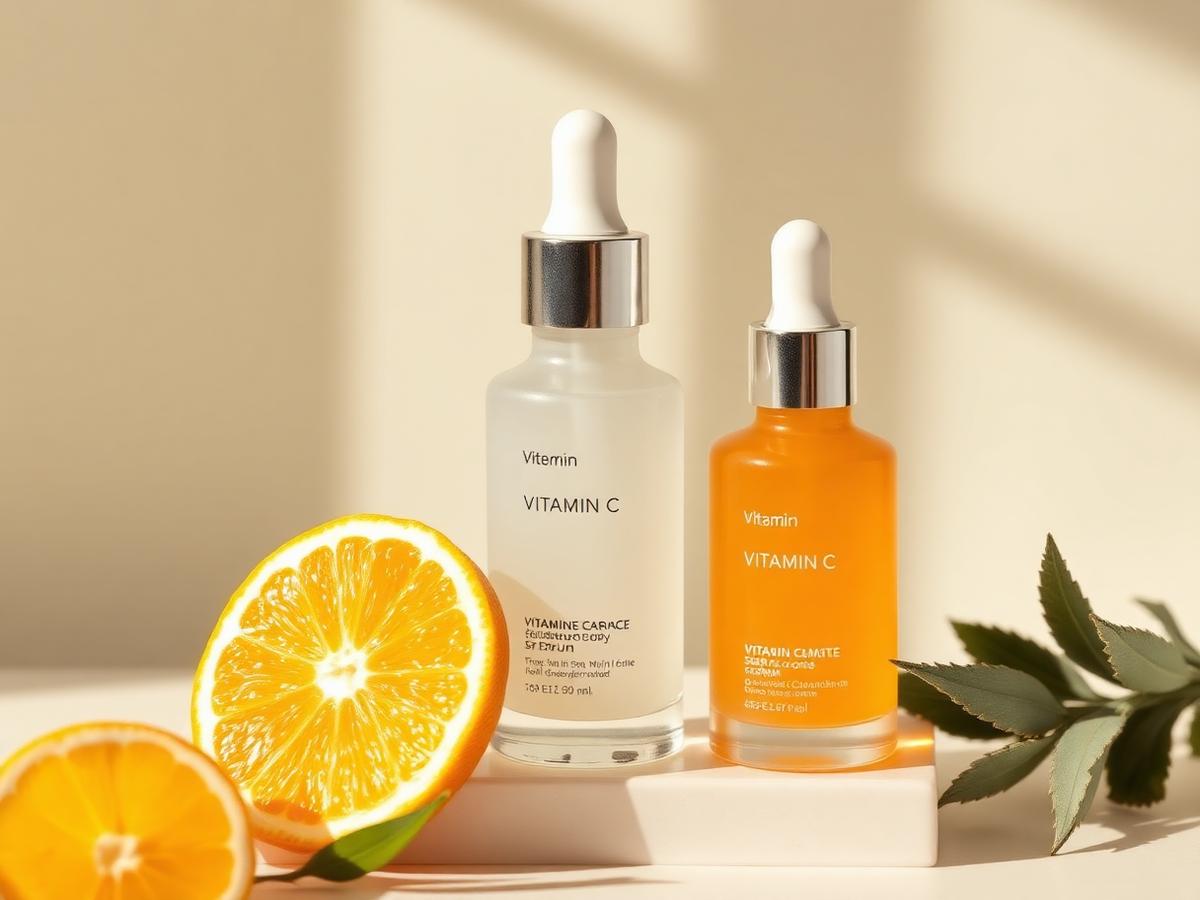
L-ascorbic acid is the strongest and least stable. Derivatives are gentler and slower. The form on the label matters more than the percentage on the front.
L-ascorbic acid
The most studied form and the least stable. Effective at 10–20% at low pH, prone to oxidizing to a brown tint, and the most likely to sting sensitive skin. Buy small bottles, opaque packaging, and use them quickly.
Derivatives
- Ascorbyl glucoside — stable, gentle, slower visible payoff. A good sensitive-skin entry point.
- Tetrahexyldecyl ascorbate (THD) — oil-soluble, stable, comfortable in richer textures, usually pricier.
- Sodium ascorbyl phosphate — stable and mild, often used in formulas aimed at oily surfaces.
- Ethylated ascorbic acid — stable, low-sting, and increasingly common in mid-range serums.
Packaging is part of the formula
For L-ascorbic acid, a clear dropper bottle on a sunny bathroom shelf is a countdown. Opaque glass, an airless pump, or single-dose ampoules meaningfully extend usable life.
A serum that has turned dark amber or brown has oxidized. It is not dangerous, but it is no longer doing the job you bought it for.
How to decide
If you tolerate acids well and will finish a bottle in three months, L-ascorbic acid gives the most visible result per dollar. If your skin flushes easily or you want a bottle that survives a bathroom shelf, choose a derivative and accept a slower curve.
How to use it without wasting it
- Morning, on clean dry skin, before moisturizer and sunscreen.
- Three to four drops is a full face. More is not stronger.
- Store away from heat and light — a drawer, not the shower ledge.
- Introduce it on alternate mornings for two weeks if you are prone to stinging.
What vitamin C will and will not do
Realistically: a brighter, more even-looking tone over six to twelve weeks, and a useful antioxidant partner to sunscreen in the morning. It will not erase deep discoloration, and it is not a substitute for SPF.
Put this into practice
Let Dermavitas apply it to your skin.
Ingredient-first, brand-agnostic.
Score a vitamin C against my routineThe short version
- The form matters more than the percentage.
- L-ascorbic acid: strongest, least stable.
- Derivatives: gentler, slower, more forgiving.
- Brown serum is finished — replace it.
Frequently asked
- What percentage of vitamin C should I use?
- 10–15% L-ascorbic acid is the practical sweet spot. Above 20% adds sting more reliably than it adds result.
- Can I use vitamin C at night?
- You can, but morning makes better use of its antioxidant role alongside sunscreen.
- Can I layer vitamin C with a retinoid?
- Split them: vitamin C in the morning, retinoid at night. Same routine, no compounded irritation.