AI skincare · September 21, 2026
AI skin analysis: what it is, how it works, and how to get a real routine from a free scan
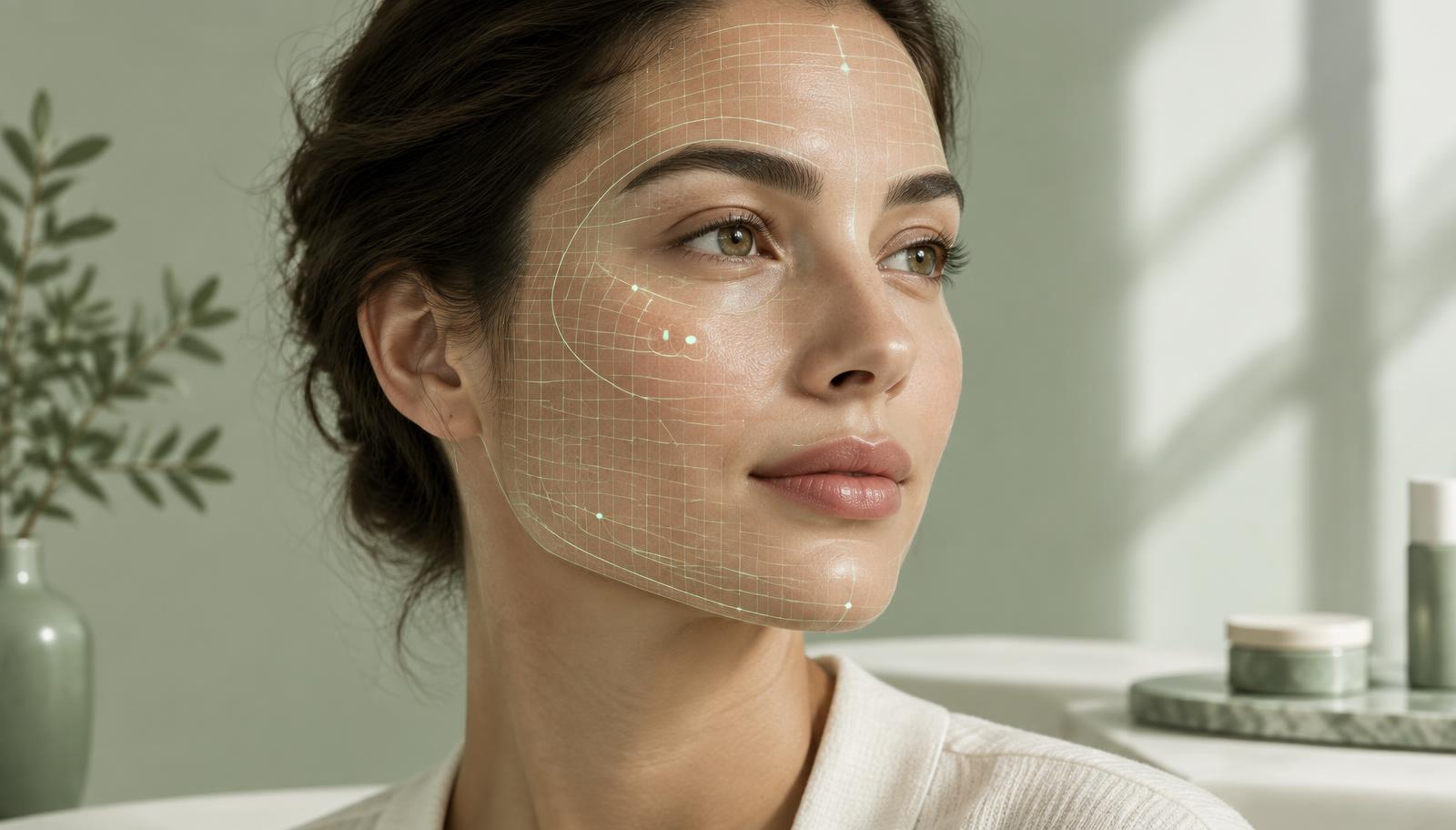
The short answer
AI skin analysis is software that reads a photo of your face and reports visible cosmetic characteristics — shine and oil distribution, surface texture, pore visibility, tone evenness, and hydration cues — usually zone by zone. A good tool then connects those readings to ingredients and an ordered routine. The Dermavitas AI skin analysis does this free from one selfie plus six short questions, and returns a personalized AM/PM routine rather than a single score. It is cosmetic guidance, not a medical diagnosis.
AI skin analysis has quietly become the front door to skincare for millions of people. Instead of guessing your skin type from a magazine quiz or buying whatever an influencer uses, you take a photo and get a structured read of what is visibly happening on your face. But the category is crowded with tools that produce a number and sell you a cart. This guide explains how AI skin analysis genuinely works under the hood, what the technology is good at and where it fails, how to capture a photo worth analyzing, how to judge any tool you try, and how the free Dermavitas AI skin analysis goes further by converting the scan into a routine you can actually follow tonight.
What is AI skin analysis?
AI skin analysis is the use of computer vision and machine learning to evaluate the appearance of your skin from an image. The system locates your face, maps landmarks, splits the face into zones, and describes each zone in cosmetic terms: how light scatters off the surface, where reflections concentrate, how uniform pigment appears, and how shadow collects in pores and fine lines.
The key word is appearance. AI skin analysis is a cosmetic mirror with structure — it reports what is visible, not what is medical. It can tell you that your forehead reads shiny by midday while your cheeks show flaking. It cannot tell you whether a mole is safe, whether a rash is eczema or an allergic reaction, or whether a breakout is hormonal. Those questions belong to a licensed dermatologist.
Clinic imaging systems do similar work with controlled lighting, polarized filters, and sometimes UV photography. A phone-based AI skin analysis approximates the same readings from ordinary daylight, which is why capture conditions matter more than model architecture for everyday users.
How AI skin analysis works, step by step
Understanding the pipeline helps you judge any tool you try — including ours. Every credible AI skin analysis follows roughly the same five steps, and the quality differences between tools come from how carefully each step is handled.
Step one is detection and quality control. The face is located, landmarks are mapped, and the frame is checked for focus, exposure, and framing. Good tools reject a bad photo rather than guess at it, because a blurry bathroom downlight shot produces confident nonsense.
Step two is zoning. The face is split into forehead, nose, cheeks, chin, and the perioral and under-eye areas, because those zones behave differently. A single global 'oily' verdict is the most common reason people buy the wrong cleanser.
Step three is the vision read. A vision-capable model describes each zone in cosmetic terms — shine, texture, pore visibility, tone, hydration cues.
Step four is interpretation. Raw zone readings are translated into skin concerns and priorities: which zones need calming, which need gentle exfoliation, which need barrier support.
Step five is the part most tools skip: turning readings into action. The Dermavitas pipeline maps concerns to ingredient categories — humectants, barrier lipids, niacinamide, azelaic acid, retinoids, chemical exfoliants, sunscreen — and sequences them into an application order with pacing rules so two strong actives never land on the same night.
What an AI skin analysis can actually measure
Credible tools report on a consistent set of visible characteristics. If a tool claims to measure something invisible from a photo — hormone levels, internal hydration, collagen density — treat the claim as marketing.
- Shine and oil distribution: where reflection concentrates, and whether it follows a classic T-zone pattern or is diffuse across the face
- Surface texture: roughness, small bumps, and flaking that suggest barrier disruption or a need for gentle exfoliation
- Pore visibility: how prominent pores read on the nose and inner cheeks under diffuse light
- Tone evenness: dullness, redness distribution, and post-blemish marks
- Hydration cues: tightness, crepey light response, and flaking that indicate dehydration rather than dryness
- Early fine lines: creasing around the eyes and forehead that responds to retinoids, peptides, and daily sunscreen
What AI skin analysis cannot do
The limits are as important as the capabilities, and any honest tool states them plainly. AI skin analysis is not dermatology. It does not diagnose, treat, or prevent any medical condition, and it never replaces a professional examination.
Three specific boundaries matter. First, anything under the skin — moles, lesions, anything that has changed shape, bled, or itched persistently — needs a dermatologist, full stop. Second, internal drivers like hormones, medication, and diet are invisible to a camera; a good questionnaire captures what the photo cannot. Third, accuracy depends on lighting: the same face under a warm bathroom bulb and overcast window light can produce two different reports.
Dermavitas is explicit about this boundary everywhere the analysis appears: the guidance is cosmetic only, and persistent, changing, or worrying skin changes should always be checked by a licensed dermatologist.
How to take a photo worth analyzing
The single biggest lever on the quality of any AI skin analysis is the photo. Models are surprisingly forgiving of phone quality and surprisingly unforgiving of lighting. A mid-range phone near a window beats a flagship phone under a downlight every time.
Face a window in daylight with the light in front of you, never behind or directly above. Overcast daylight is ideal because it is diffuse — hard directional sun creates shadows that read as texture. Skip makeup, SPF, and moisturizer if you can; you want the camera to see bare skin.
Hold the camera at eye level, arm's length, with your full face in frame and a neutral expression. Take three shots and use the sharpest. Avoid beauty filters entirely — even the subtle 'skin smoothing' your phone applies by default erases exactly the information the analysis needs.
Repeat the same setup for rescans: same window, same time of day, same distance. Progress tracking only works when the capture conditions are repeatable, which is why Dermavitas guides you through the same framing each week.
How to choose an AI skin analysis worth trusting
The category ranges from clinical research tools to glorified quiz funnels. A few green flags separate the useful from the cosmetic theater.
- Zone-by-zone reporting: real analysis describes zones differently; a single overall score is a red flag on its own
- Cosmetic honesty: the tool states plainly that it does not diagnose or treat medical conditions
- Actionable output: readings connect to ingredients and an ordered routine, not just a score or a product cart
- Rejects bad input: a tool that analyzes a blurry dark photo is guessing
- Privacy clarity: a plain-language policy explaining what happens to your photo, how long it is kept, and how to delete it
- Repeatability: the same face in the same conditions should produce roughly the same report on consecutive days
How the free Dermavitas AI skin analysis works
Dermavitas runs the full pipeline free: one selfie, six short questions, and a zone-by-zone read of shine, texture, pores, tone, and hydration cues. The questions exist because a photo cannot see everything — sensitivity caps active strength, climate changes moisturizer weight, budget filters product tiers, and the products you already own are reused instead of replaced.
The output is not a score. It is an ordered AM and PM routine with application order, wait times, and pacing rules — which active goes on which night, what never mixes, and when to step up strength. That gap between 'analysis' and 'routine you can follow tonight' is where most tools stop and where Dermavitas starts.
From there, the system keeps working: weekly rescans in repeatable conditions track progress zone by zone, and the routine adjusts as your skin responds. Your scan history is stored in your account so you never re-upload, and you can delete your photos at any time from the dashboard.
What to do with your results
The most common mistake after a first AI skin analysis is buying everything at once. Resist it. Skin responds to consistency, not novelty.
Start with the routine order the analysis gives you and introduce at most one new active every two weeks. Keep everything else boring and stable so you can attribute changes to the right variable. Rescan weekly in the same conditions and compare zones, not vibes — the under-eye and cheek zones usually move first, and oil-pattern normalization typically takes four to six weeks of consistent routine.
If the analysis flags persistent redness, texture, or breakouts that do not respond to a consistent cosmetic routine after eight to twelve weeks, that is your signal to see a dermatologist — not to buy stronger products.
Frequently asked questions
Is AI skin analysis accurate?
For visible, cosmetic characteristics — shine, texture, pore visibility, tone, hydration cues — yes, provided the photo is well lit and in focus. Accuracy collapses with poor lighting and beauty filters, which is why capture conditions matter more than the phone. It does not assess anything under the skin or diagnose medical conditions.
Is the Dermavitas AI skin analysis really free?
Yes. The scan, the zone-by-zone report, and the personalized AM/PM routine are free — one selfie plus six short questions. Premium adds weekly progress tracking, saved scan history, the shelf scanner, and coaching tools.
Can AI skin analysis detect skin cancer or disease?
No, and any tool that claims otherwise should not be trusted. AI skin analysis is cosmetic guidance only. Any mole or lesion that has changed, bled, or itched persistently needs a licensed dermatologist.
What happens to my photo?
With Dermavitas, your selfie is stored in your private account so you can track progress without re-uploading, and you can delete your photos at any time from the dashboard. Photos are never used for advertising or shared with third parties.
How often should I rescan?
Weekly is the right cadence for most people — often enough to see trends, spaced enough to let skin respond. Use the same window, time of day, and framing each time so the comparison is meaningful.
Do I need an expensive phone for a good analysis?
No. Any modern smartphone camera is more than adequate. Diffuse daylight, bare skin, a sharp frame, and no beauty filters matter far more than the camera hardware.
Keep reading
AI skincare
AI skincare: how artificial intelligence improves your face routine (and where it falls short)
15 minAI skincare
Skin analyzer: how the Dermavitas Skin AI Analyzer reads your face (and what the results mean)
15 minAI skincare