AI skincare · September 23, 2026
AI skincare: how artificial intelligence improves your face routine (and where it falls short)
The short answer
AI skincare is software that reads a photo of your face, combines it with a few answers about your skin habits and goals, and builds a personalized routine — typically an ordered AM/PM plan with ingredient-level reasoning and pacing rules. It improves your skin by removing guesswork: the right ingredients, in the right order, introduced at the right pace. The Dermavitas AI skincare analysis does this free from one selfie and six questions. It is cosmetic guidance, not medical care.
Most skincare fails for a boring reason: the routine was built for an average person who does not exist. Your forehead is oily, your cheeks are dry, your budget is real, and your tolerance for a ten-step ritual is zero — yet the advice you find online assumes none of that. AI skincare exists to close that gap. Instead of copying an influencer's shelf, you show the software your actual face and get a plan built around what is visibly happening on it. This guide explains what AI skincare genuinely is, how it improves your skin in practice, where the technology honestly falls short, how to tell a serious tool from a marketing wrapper, and how to run your first free analysis with Dermavitas tonight.
What is AI skincare?
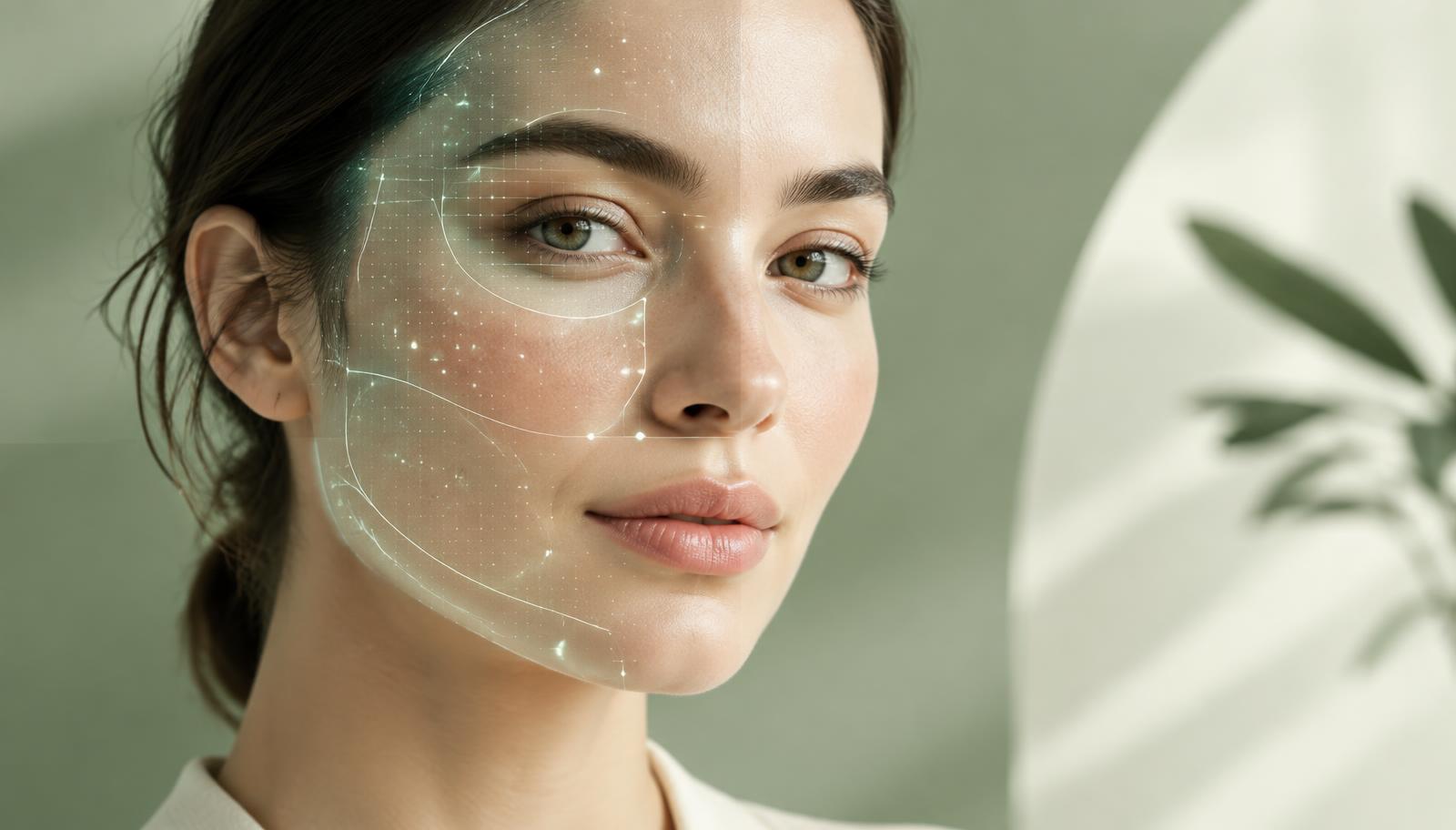
AI skincare is the use of artificial intelligence — mostly computer vision plus a reasoning layer — to personalize cosmetic skincare. The system looks at a photo of your face, describes what is visible in cosmetic terms (shine, texture, pore visibility, tone evenness, hydration cues), combines that with what you tell it about your habits, sensitivities, and goals, and produces a routine tailored to you.
That last part is what separates AI skincare from a quiz. A quiz asks you to self-diagnose — most people cannot reliably tell dehydrated skin from dry skin, or purging from a reaction. A camera-based tool reads the surface directly and uses your answers as context rather than as the whole diagnosis.
The output should be a routine, not a score. A number out of 100 tells you nothing you can act on. A useful AI skincare tool tells you what to use in the morning, what to use at night, in which order, and how fast to introduce anything strong.
How AI skincare improves your face in practice
The improvement does not come from the AI itself — it comes from finally doing the right things consistently. AI skincare contributes four specific advantages that a generic routine cannot.
First, accuracy about your starting point. Zone-by-zone readings catch the combination patterns most people miss: a shiny T-zone with flaking cheeks needs two different strategies, and treating the whole face as 'oily' or 'dry' is how barriers get damaged.
Second, correct sequencing. Ingredients interact. Vitamin C in the morning under sunscreen, retinoids at night away from exfoliating acids, niacinamide as a flexible supporting layer — the order and spacing matter as much as the products, and this is where most self-built routines quietly fail.
Third, pacing. Introducing three actives in one week is the most common cause of the irritation that makes people quit skincare entirely. A good AI skincare plan staggers new actives — typically one every two weeks — so you can tell what is helping and what is stinging.
Fourth, feedback. When you rescan weekly under the same lighting, you get an honest read on whether texture, shine, and tone are actually moving. That feedback loop is what keeps a routine alive past the first enthusiastic fortnight.
- Zone-aware readings catch combination skin patterns that self-diagnosis misses
- Sequencing rules keep conflicting actives off the same night
- Pacing introduces one new active at a time so irritation is traceable
- Weekly rescans turn 'is this working?' into a measurable answer
What AI skincare can improve — with realistic timelines
Cosmetic improvements follow skin biology, not app timelines. Cell turnover takes roughly four weeks, so anything promising visible change in days is describing temporary hydration or lighting, not structural improvement.
Hydration and surface comfort respond fastest — often within one to two weeks of a routine that pairs humectants with a proper moisturizer and stops over-cleansing. Shine balance and the look of pores typically follow in four to six weeks as niacinamide and consistent cleansing settle in. Texture and the look of post-blemish marks take eight to twelve weeks of patient exfoliation and daily sunscreen. Early fine lines respond to retinoids over three to six months.
AI skincare helps here not by speeding biology up but by keeping you on the plan long enough for biology to work — and by telling you which concern to expect movement on first, so you do not abandon a working routine because the slowest concern has not budged yet.
What AI skincare cannot do
Honesty about limits is the fastest way to judge any tool in this category. AI skincare is cosmetic guidance. It cannot diagnose, treat, or prevent any medical condition.
It cannot evaluate moles or lesions — anything new, changing, bleeding, or itching belongs in front of a dermatologist, full stop. It cannot see internal drivers: hormones, medication, sleep, and diet all show up on your face, but a camera cannot tell you why. It cannot guarantee results, because adherence and individual variation dominate any prediction. And it cannot read a bad photo — heavy makeup, beauty filters, and warm bathroom downlight all degrade the analysis, which is why capture conditions matter so much.
A tool that claims any of these capabilities is telling you something about its marketing, not its technology.
How to choose an AI skincare tool worth trusting
The category is crowded, and the quality spread is enormous. A few green flags separate serious tools from wrappers around a generic chatbot.
- It reads your actual face from a photo, not just a self-report quiz
- It reports zone by zone rather than one global verdict
- It explains why each step is in your routine, in ingredient terms
- It paces strong actives instead of stacking them all on day one
- It states plainly that it offers cosmetic guidance, not medical diagnosis
- It is clear about what happens to your photos and lets you delete them
How the free Dermavitas AI skincare analysis works
Dermavitas was built around the idea that the scan is the beginning, not the product. You take one selfie in indirect daylight, answer six short questions about your habits, sensitivities, and goals, and the system reads your face zone by zone — shine, texture, pore visibility, tone, and hydration cues.
Those readings are then mapped to ingredient categories and sequenced into a complete AM/PM routine: what to apply, in what order, with pacing rules so strong actives are introduced one at a time. Every step carries its reasoning, so you learn the logic rather than just obeying a list.
The analysis is free, the routine is yours to keep, and weekly rescans let you watch texture, shine, and tone move over the following months. If you later want progress tracking, shelf scanning, and the AI coach, those live in the premium tier — but the core analysis and routine cost nothing.
Getting the most from your first scan
The quality of the input decides the quality of the plan, and a good photo takes thirty seconds to set up.
- Stand facing a window in indirect daylight — never under warm bathroom downlight
- Bare, clean skin: no makeup, no sunscreen tint, no beauty filter
- Hold the phone at eye level, relaxed expression, hair off the face
- Answer the six questions honestly, especially about sensitivity and current products
- Rescan weekly in the same spot at the same time of day so comparisons are fair
Frequently asked questions
What is AI skincare?
AI skincare is software that uses computer vision and machine learning to read your skin from a photo, combine that with your habits and goals, and build a personalized cosmetic routine — usually an ordered AM/PM plan with ingredient-level reasoning and pacing rules.
Can AI really improve my skin?
Indirectly, yes. The AI does not change your skin — it removes the guesswork that makes routines fail: wrong products for your zones, conflicting actives on the same night, and introducing everything at once. Consistency with a correct plan is what improves skin, and AI skincare makes that plan correct and followable.
Is AI skincare safe?
As cosmetic guidance, yes — provided the tool paces strong actives and is honest about its limits. It is not a substitute for medical care: anything new, changing, painful, or persistent on your skin should be seen by a licensed dermatologist.
How long until AI skincare shows results?
Hydration and comfort often improve within one to two weeks. Shine balance and the look of pores take four to six weeks. Texture and post-blemish marks take eight to twelve weeks. Early fine lines respond over three to six months. Weekly rescans in consistent lighting make the progress visible.
Is the Dermavitas AI skincare analysis really free?
Yes. The selfie analysis, the six-question profile, and the full personalized AM/PM routine with ingredient reasoning are free. Premium adds progress tracking, shelf scanning, and the AI coach, but the core analysis costs nothing.
What happens to my selfie?
Your photo is used to produce your analysis and, if you create an account, is stored so you do not have to re-upload it for future scans. You can delete your photos and your account at any time from your dashboard settings.
Do I still need a dermatologist if I use AI skincare?
For cosmetic goals like texture, glow, and routine structure, AI skincare is a strong starting point. For anything medical — moles, rashes, persistent breakouts, sudden changes — you need a licensed dermatologist. The two complement each other; they do not compete.
Keep reading
AI skincare
AI skin analysis: what it is, how it works, and how to get a real routine from a free scan
16 minAI skincare
Skin analyzer: how the Dermavitas Skin AI Analyzer reads your face (and what the results mean)
15 minAI skincare