Label literacy · June 9, 2026
How to read a skincare ingredient list in 30 seconds
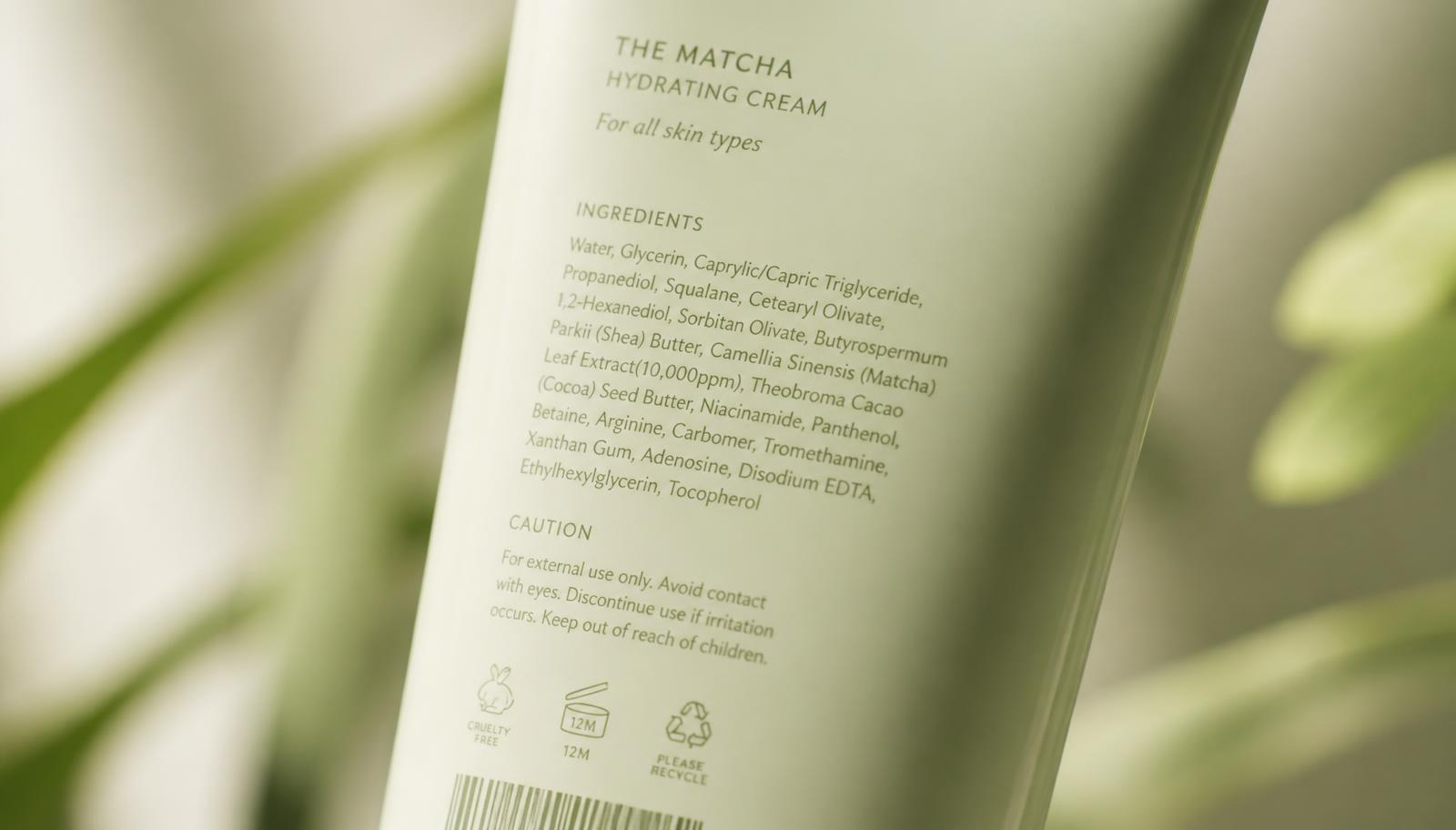
The short answer
Ingredients are listed by concentration down to 1%. Read the first five to learn what the product actually is, then find the marketed active — if it sits below the preservatives, it is a trace amount.
Ingredient lists are ordered by concentration down to 1%. That single rule lets you judge most products faster than reading the front of the bottle, and it is the only part of the packaging that is legally constrained rather than written by a copywriter.
Start at the top: the first five ingredients are the formula
The first five ingredients are, in almost every case, the majority of what is in the bottle. If water, a humectant, and an emollient lead the list, you are holding a moisturizer regardless of what the label calls it.
This is why two products at wildly different prices can be functionally identical. The difference lives in texture, stability, and elegance — real qualities, but not the ones the marketing usually claims.
- Water (aqua) first — a standard water-based formula
- An oil or butter high on the list — richer, better for dry or compromised skin
- Alcohol denat. in the top three — fast-drying, often too stripping for sensitive skin
- A silicone high up — mostly a texture and finish decision
Then find the hero
Look for the marketed active. If it sits after the fragrance and the preservatives, it is present below 1% and is doing far less than the front label implies. That is not automatically bad — it is simply not the reason to buy.
Preservatives are your ruler. Phenoxyethanol, sodium benzoate, and the parabens are almost always used at well under 1%, so anything listed after them is in trace territory.
- Top third — likely doing the work
- Middle — supporting texture, feel, and stability
- Bottom, after preservatives — trace, marketing-led
Percentages that actually matter
For the common actives, effective ranges are well established and brands that hit them usually say so on the front. When a percentage is absent from a product whose entire pitch is one active, assume the number is unflattering.
- Niacinamide — 2–5% for most goals; 10% is not proportionally better and irritates more
- Vitamin C as L-ascorbic acid — 10–20%, and it should be in an opaque or amber package
- Retinol — 0.1–1%, started twice weekly and built up slowly
- Salicylic acid — 0.5–2%, leave-on or wash-off
- Zinc oxide sunscreen — the SPF number matters more than the percentage
Claims that mean nothing on their own
Dermatologist-tested, clinically proven, and clean are unregulated in most markets. Dermatologist-tested can mean a single dermatologist looked at it. Clinically proven does not specify what was proven, on how many people, or against what.
Some claims are meaningful. Fragrance-free is a real formulation choice. Non-comedogenic is loosely defined but still directional. A named active with a stated percentage is the strongest signal on the entire package.
- Meaningful — fragrance-free, stated active percentage, SPF and broad-spectrum rating
- Weak — dermatologist-tested, clinically proven, hypoallergenic
- Meaningless — clean, chemical-free, natural, toxin-free
Fragrance, essential oils, and reactive skin
Fragrance (parfum) is the most common trigger in cosmetic reactions, and essential oils are fragrance. A product marketed as natural because it is scented with lavender and citrus oils is, for reactive skin, a higher risk than a synthetic fragrance-free formula.
If your skin is currently irritated, remove fragranced products first before you change anything about your actives. It is the cheapest variable to eliminate and often the only one that needed changing.
A worked example
Take a serum whose front label sells vitamin C. The list reads: water, glycerin, propanediol, niacinamide, dimethicone, phenoxyethanol, xanthan gum, ascorbyl glucoside, tocopherol, parfum.
The honest reading: this is a well-made hydrating niacinamide serum with a trace of a mild vitamin C derivative and a fragrance you may not want. Nothing here is bad. It is simply not the vitamin C product it is being sold as, and buying it to get vitamin C means paying for a claim rather than a formula.
The 30-second method, in order
Once this is habit, most labels resolve in half a minute in the aisle.
- Read the first five ingredients — decide what the product actually is
- Find the preservative — everything below it is trace
- Locate the marketed active relative to that line
- Scan for parfum or essential oils if your skin is reactive
- Check whether a percentage is stated anywhere; if not, discount the claim
Frequently asked questions
Are skincare ingredients listed in order of amount?
Yes, down to 1%. Ingredients present above 1% must be listed in descending order of concentration; below that threshold they can appear in any order.
Where should the active ingredient appear on the list?
In the top third for a product built around it. If the active appears after the preservatives, such as phenoxyethanol, it is present at a trace level.
Does 'dermatologist-tested' mean anything?
Very little. The phrase is unregulated in most markets and does not specify what was tested, on how many people, or with what result. Fragrance-free and a stated active percentage are far more informative.
Keep reading
AI skincare
AI skincare: how artificial intelligence improves your face routine (and where it falls short)
15 minAI skincare
AI skin analysis: what it is, how it works, and how to get a real routine from a free scan
16 minAI skincare